


Car Air Freshener OEM: What It Is and How the Process Works
Car air freshener OEM means a manufacturer produces paper car air fresheners built entirely to your specifications — your logo, your scent, your shape, your packaging. Brands and distributors choose OEM because it delivers full brand exclusivity, lower unit costs at volume, and complete control over the product that carries your name.
This guide explains exactly what OEM means, how the manufacturing process works from inquiry to delivery, what certifications to require, and what to look for in a reliable China-based paper air freshener manufacturer.
What Is Car Air Freshener OEM?
OEM stands for Original Equipment Manufacturer. In the car air freshener industry, it means the manufacturer produces the product according to the buyer's design, scent brief, and packaging specifications — and the buyer sells it under their own brand.
OEM is different from ODM and private label. Each model gives you a different level of control, customization, and speed.
| Factor | OEM | ODM | Private Label |
|---|---|---|---|
| Design source | Buyer provides design | Manufacturer creates design | Manufacturer's stock design |
| Logo / branding | Buyer's brand | Buyer's brand | Buyer's brand |
| Customization level | Highest | Medium | Low |
| MOQ (paper freshener) | 500–3,000+ units | 300–1,000 units | 100–500 units |
| Lead time | 4–6 weeks production | 3–4 weeks production | 1–2 weeks |
| Unit cost at volume | Lowest | Mid-range | Highest per unit |
| Best for | Established brands scaling | New brands testing the market | Retailers needing speed |
For brands building a long-term product line, OEM gives the most control. For brands that need to launch quickly with minimal design work, ODM is faster. Private label suits retailers who need speed over uniqueness.
Why Brands and Distributors Choose Paper Car Air Freshener OEM
Paper is the dominant substrate in the global car air freshener market — and for good reason. Paper-based customized paper hanging air fresheners are lightweight, low-cost to produce, easy to customize with full-color printing, and compatible with eco-friendly sourcing requirements.
Three core reasons B2B buyers choose paper OEM:
- Cost efficiency at scale. OEM paper car air fresheners from China-based manufacturers typically cost between $0.08 and $0.52 per unit depending on order volume, substrate, and print complexity. At 5,000+ units, the per-piece cost drops significantly compared to retail-ready alternatives.
- Full branding control. With OEM, every element is yours: die-cut shape, CMYK double-sided printing, QR codes, multilingual packaging text, and retail-ready hanging card design. Your brand looks exactly how you want it.
- Eco and compliance advantage. Paper substrates sourced with FSC certification meet increasing EU and UK retailer requirements for sustainable packaging. Unlike plastic or gel alternatives, paper air fresheners are biodegradable — a growing selling point for environmentally conscious markets.
The Car Air Freshener OEM Process — Step by Step
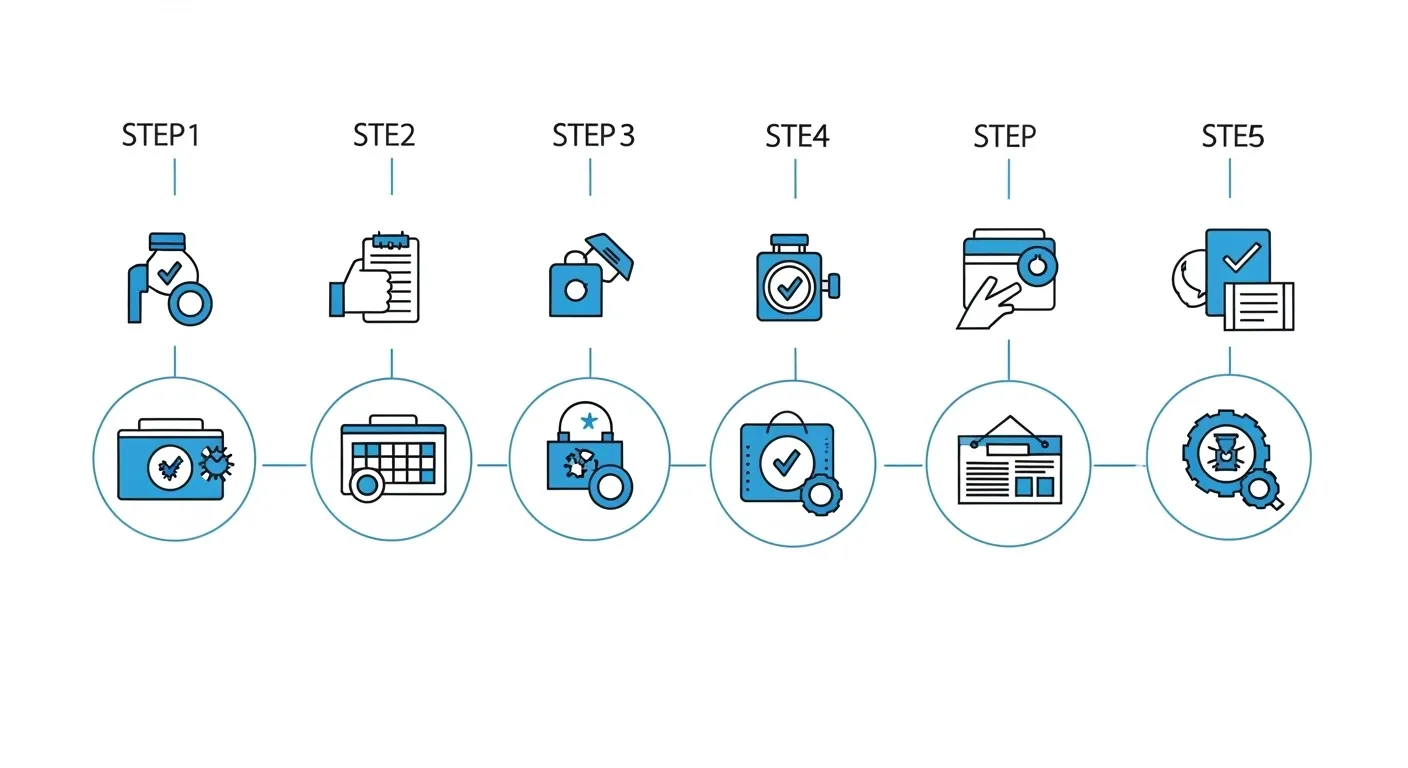
Most competitors describe the OEM process in 3 to 5 vague bullet points. Below is the complete stage-by-stage process with realistic timelines, so you know exactly what happens — and what you need to do — at each step.
- Initial Inquiry and RFQ (Day 1–3)
Submit your requirements to the manufacturer: target quantity, shape preference, fragrance type, target sales market, and packaging style. The manufacturer responds with a quotation, MOQ confirmation, and production timeline. - Artwork and Design Approval (Day 3–7)
Provide your logo and artwork in vector format (AI, EPS, or PDF files). The manufacturer creates a dieline proof showing your design on the exact die-cut shape. Review carefully — changes after this stage can delay production. - Pre-Production Sample (Day 7–14)
The factory produces a physical sample with your chosen fragrance applied to the paper substrate. You receive this by express courier. Approve it, request revisions, or select an alternative scent. Do not skip this step — the sample is your quality benchmark for the full production run. - MOQ and Pricing Confirmation (Day 14–16)
Lock in the final order quantity, unit price, payment terms, and Incoterms (FOB, CIF, or DDP). This is also the stage to request compliance documentation — IFRA, MSDS, FSC certificates. - Mass Production (Day 16–35)
The full production run begins: printing → die-cutting → fragrance saturation → assembly. Cotton wove board, the most common substrate used in car air fresheners, absorbs fragrance oil during saturation and releases it gradually over 30 to 60 days — a key quality marker. - Quality Control and Inspection (Day 35–38)
ISO 9001-certified manufacturers conduct inline and end-of-line QC checks: print color accuracy, fragrance saturation level, die-cut consistency, and packaging seal integrity. For orders over 5,000 units or high-value launches, consider requesting a third-party inspection through SGS or Bureau Veritas. - Packaging and Labeling (Day 38–40)
Each air freshener is individually vacuum-sealed (or poly-bagged), mounted on the printed backing card, and packed into master cartons. Retail barcoding, multilingual safety text, and country-of-origin labeling are applied at this stage. - Shipping (Day 40–55+)
Large orders ship by sea freight. Urgent or small orders use air freight or express courier. See the shipping section below for a full cost and transit time breakdown.
Total timeline from first inquiry to warehouse delivery: 10–14 weeks for sea freight orders. Air freight reduces the final leg to 5–10 days but at significantly higher cost per unit.
Paper Materials Used in OEM Car Air Fresheners
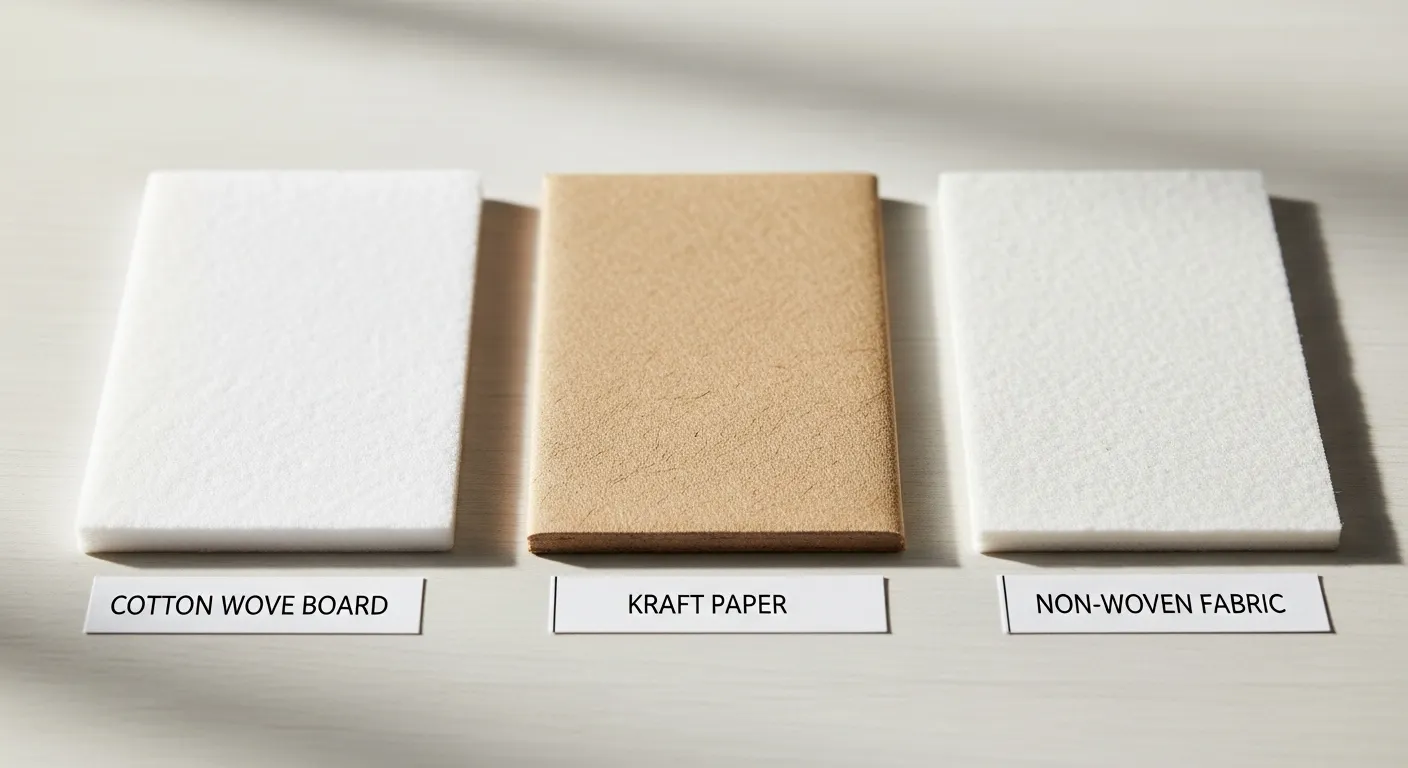
Not all paper car air fresheners are made from the same substrate. The material directly affects fragrance retention, print quality, and finished product appearance.
Common substrates used in OEM production:
- Cotton wove board (most common): A multi-layer absorbent card that holds fragrance oil evenly and releases scent gradually over 30–60 days. It takes offset and digital printing cleanly and is the industry standard for premium hanging car air fresheners.
- Kraft paper: A rougher, recycled-appearance substrate often used for natural or eco-positioned brands. Fragrance retention is slightly lower than cotton wove board but suits specific branding aesthetics.
- Non-woven fabric card: A fabric-feel option with higher fragrance oil loading capacity. Used in premium or gift-positioned products. Higher per-unit cost.
Print methods available:
- Offset printing (best for large runs, color accuracy, low per-unit cost)
- Digital printing (best for short runs or products with variable data like QR codes)
- UV coating (protective finish, improves print vibrancy and shelf resistance)
The Aroma Ease product catalog covers substrate options, scent profiles, and shape templates in detail — useful during the early design phase.
OEM Compliance and Certifications for Global Buyers
This is the section most OEM guides skip entirely — and it is where B2B buyers make costly mistakes. Before placing a production order, confirm the following certifications with any manufacturer you work with.
| Certification | Required For | What It Covers | Who Issues It |
|---|---|---|---|
| IFRA Compliance | Global (fragrance safety) | Safe fragrance ingredient usage limits | International Fragrance Association |
| EU REACH | European Union | Chemical substance safety registration | EU regulatory authority |
| CARB VOC | USA (especially California) | VOC emission limits in enclosed vehicle spaces | California Air Resources Board |
| FSC Certification | EU, UK, Australia | Proof of sustainably sourced paper substrate | Forest Stewardship Council |
| MSDS / SDS | Global | Safety data sheet for all fragrance oils used | Manufacturer / fragrance supplier |
| ISO 9001 | Global (quality assurance) | Manufacturing quality management system | ISO-accredited certifying body |
What to ask any manufacturer:
Request these documents before production — not after. Ask for the IFRA compliance statement specific to your fragrance formula, the FSC chain-of-custody certificate number, and the MSDS for each fragrance oil in your product. Legitimate manufacturers will have these documents on file and will share them without hesitation.
EU REACH compliance is particularly important for European distributors — non-compliant fragrance ingredients can result in product recalls and import bans. CARB VOC requirements apply to products sold in California and are increasingly adopted by major US retailers as a sourcing standard.
Shipping and Logistics for OEM Orders
Shipping costs and transit times vary significantly by order size and destination. The table below covers the main options for brands shipping from China.
| Shipping Method | Best For | Transit Time (China → EU/US) | Estimated Cost |
|---|---|---|---|
| Sea Freight – FCL (full container) | Orders 5,000+ units | 25–35 days | $0.05–$0.15/unit |
| Sea Freight – LCL (less than container) | Orders 1,000–5,000 units | 30–40 days | $0.10–$0.30/unit |
| Air Freight | Urgent orders under 500 kg | 5–10 days | $1.50–$4.00/kg |
| Express Courier (DHL/FedEx) | Samples only | 3–7 days | $4.00–$8.00/kg |
Incoterms explained simply:
- FOB (Free On Board): The manufacturer delivers goods to the port. You arrange and pay for shipping from that point. Most common for experienced importers.
- CIF (Cost, Insurance, Freight): The manufacturer ships to your destination port and covers insurance. You handle customs and local delivery.
- DDP (Delivered Duty Paid): The manufacturer handles everything, including customs duties, to your door. Most convenient, but highest manufacturer-side cost.
For first-time buyers or smaller brands, DDP removes shipping complexity. For established importers with freight forwarder relationships, FOB typically offers the best value.
Market Data and Industry Statistics
The global car air freshener market was valued at approximately USD $2.54–$2.9 billion in 2025 and is projected to reach between $3.21 billion and $5.2 billion by 2030–2035, growing at a compound annual growth rate (CAGR) of 4.3% to 6.1% depending on the research source.
Key growth drivers include rising global vehicle ownership, increased consumer awareness of cabin air quality, and a shift toward eco-friendly and recyclable air freshener formats — trends that directly favor paper-based products over plastic and gel alternatives.
Paper car air fresheners represent a large and growing share of total market volume, particularly in mass-market retail, promotional gifting, and private label segments. For brands and distributors entering or expanding in this category, OEM manufacturing from a specialized China-based supplier remains the most cost-effective path to competitive unit pricing and brand differentiation.
About Aroma Ease — Paper Car Air Freshener OEM Manufacturer
Aroma Ease is a China-based paper air freshener manufacturer offering end-to-end OEM, ODM, private label, and wholesale services to brands and distributors in over 60 countries.
Core manufacturing capabilities:
- OEM and ODM customization: shapes, fragrances, printing, and packaging
- 80+ fragrance options plus custom scent development
- FSC-certified paper substrates for sustainable sourcing compliance
- IFRA-certified fragrance oils with MSDS documentation available
- 3-layer absorbent paper structure for consistent, long-lasting fragrance
- Fast sampling: physical samples ready in 7–10 business days
- Stable production capacity with ISO 9001 quality management
- Export experience across EU, US, UK, Australia, Southeast Asia, and Middle East markets
Aroma Ease also produces promotional paper air fresheners for corporate gifting, trade events, and branded campaigns — a high-volume segment for distributors serving the marketing and events industry.
FAQ — Car Air Freshener OEM: Questions from Brands and Distributors
Standard MOQ for OEM paper car air fresheners with custom printing is typically 500 to 1,000 units for standard shapes. Fully custom die-cut shapes (non-standard outlines) may require a higher MOQ of 1,000 to 3,000 units to cover tooling and setup costs. ODM and private label orders can often start from 300 units. Contact Aroma Ease to confirm MOQ for your specific shape and configuration.
The full timeline from first inquiry to warehouse delivery is typically 10 to 14 weeks for sea freight orders: design approval takes 1 week, sampling takes 2 to 3 weeks, mass production takes 3 to 4 weeks, and sea freight to Europe or North America takes 4 to 5 weeks. Air freight reduces the shipping leg to 5 to 10 days but at a higher cost. The most common cause of delays is late artwork submission or multiple rounds of sample revision.
At minimum, request: an IFRA compliance statement for the specific fragrance formulas in your product, an MSDS/SDS for each fragrance oil used, and FSC chain-of-custody certification if you are selling in the EU or UK. For US distribution, ask for documentation confirming CARB VOC compliance. For all markets, ISO 9001 certification confirms the manufacturer operates a formal quality management system.
OEM means you provide your design and the manufacturer builds to your exact specification — maximum brand control, best for established brands. ODM means the manufacturer offers an existing product design that you can brand with your logo — faster, lower MOQ, and better for new brands testing the market. If you have a brand identity and are building a long-term product line, OEM is the better investment. If you are launching quickly with limited design resources, ODM is the faster path.
Yes. With OEM, you can customize the die-cut shape (any outline supported with precision tooling), the fragrance (from the manufacturer's library of 80+ scents or through custom development), full-color double-sided printing, backing card design, and outer packaging (poly-bag, retail box, or bulk master carton). For custom fragrance development, expect a longer lead time and potentially a higher MOQ. Provide your artwork in vector format — AI, EPS, or PDF — to ensure print accuracy.
Get a Free Sample or Custom Quote
If you are sourcing OEM paper car air fresheners for your brand, retail range, or distribution network, Aroma Ease can help you move from concept to finished product efficiently. To start, share your target quantity, preferred shape, fragrance direction, and destination market — and the team will respond with a quote, timeline, and sample arrangement.
Contact Aroma Ease at sales@airfreshenerpaper.com or use the inquiry form on the website. Free samples are available for qualified brands and distributors.


- branded car air fresheners paper
- fresh scent car air freshener
- strong scent car air freshener
- car fragrance freshener
- car interior scent booster
- car air freshener for bad odor
- scented car air fresheners
- small batch custom paper air fresheners
- custom logo paper air fresheners
- logo printed paper air fresheners
- hotel room paper air fresheners
- Custom Air Fresheners
- paper air freshener OEM
- magnetic gift set air freshener
- smoke odor eliminator paper
- eco-friendly paper air freshener
- Paper Air Fresheners
- Car Fragrance
- Eco-Friendly Fragrance
- Sustainable Packaging
- Fast Turnaround
- Eco-Friendly Promotions


Bring Your Brand to Life with Custom Paper Air Fresheners.
- Eco-Friendly Materials
- Custom Designs
- Long-Lasting Fragrance
- Fast Turnaround
- High-Quality Printing
- Competitive Pricing
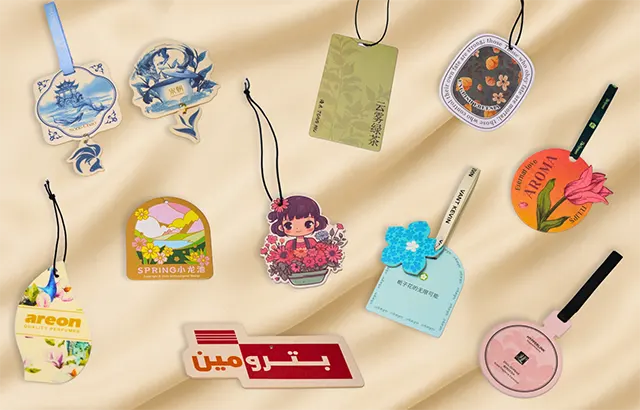

FREE SAMPLE