


 Home > Blog > Industry News >
Designing a Rotating Die Cut Paper Air Freshener
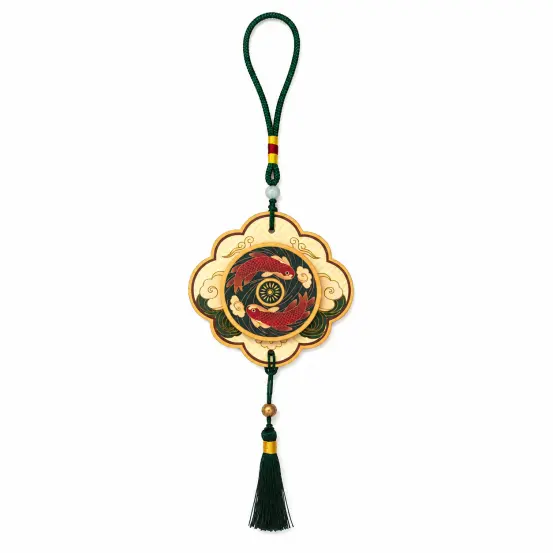
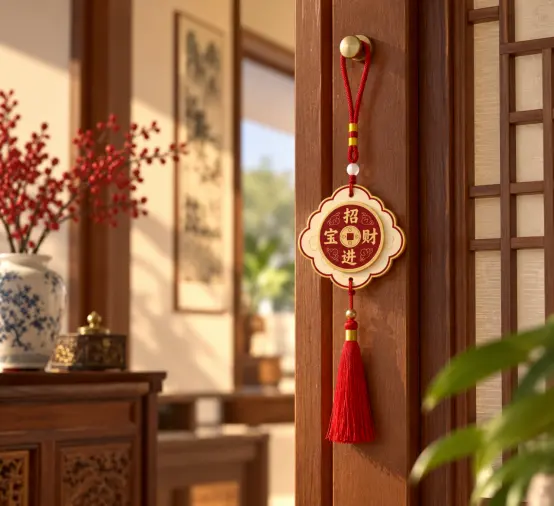
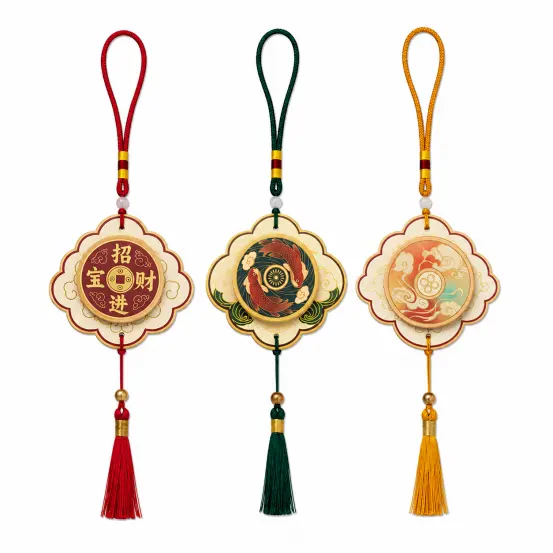
Die cut air fresheners allow brands to create scented paper products with distinctive outlines instead of relying on standard rectangular or circular shapes. The Fortune Rotating Fragrance Card from Aroma Ease demonstrates a more detailed approach, combining a cloud-shaped outer frame, a movable circular centerpiece, and a decorative red tassel.
Unlike a conventional single-piece paper air freshener, this design requires careful consideration of separate cut shapes, connection points, printed artwork, and hanging accessories. Understanding these elements can help brands prepare more practical designs and review samples before production.
How Die Cutting Creates Distinctive Air Freshener Shapes
Die cutting is a manufacturing process used to cut paper and other suitable materials into predetermined shapes.
For conventional paper air fresheners, a single cutting outline defines the finished product. Common options include circles, rectangles, product silhouettes, logos, and custom illustrations.
The Fortune design introduces a more elaborate construction.
Its cream-colored outer frame follows a decorative cloud-inspired outline, while the central red medallion forms a separate circular component.
This arrangement allows the product to retain a recognizable silhouette while incorporating a movable decorative element.
For brands considering custom die cut air fresheners, the important question is not simply whether an outline can be cut, but whether the finished shape can be produced, assembled, and handled consistently.
Understanding the Two-Part Shape Design
The Fortune Rotating Fragrance Card illustrates how multiple cut components can form one hanging fragrance accessory.
Outer Frame: Defining the Product Silhouette
The outer section uses a symmetrical, cloud-shaped outline with rounded decorative edges.
This shape provides the recognizable appearance of the product and supports the rotating centerpiece.
When developing a similar design, the outer frame should be evaluated for edge strength, sufficient material around the connection point, and the positioning of the hanging holes.
Very narrow or delicate extensions may require adjustments based on the selected material and cutting process.
Rotating Center: Creating an Independent Component
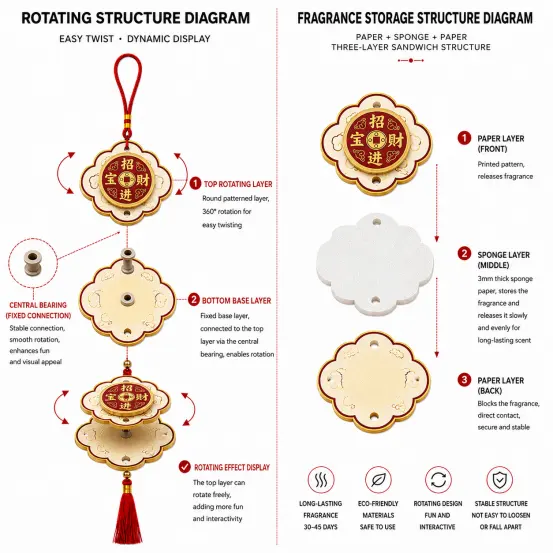
A separate circular medallion sits within the outer frame.
The center features a red background and the Chinese characters "Zhao Cai Jin Bao," surrounded by gold decorative details.
The circular component can rotate relative to the surrounding structure, adding a movable element to the finished fragrance card.
The size of the medallion and its connection position must be coordinated with the supporting frame.
Hanging Accessories: Completing the Assembly
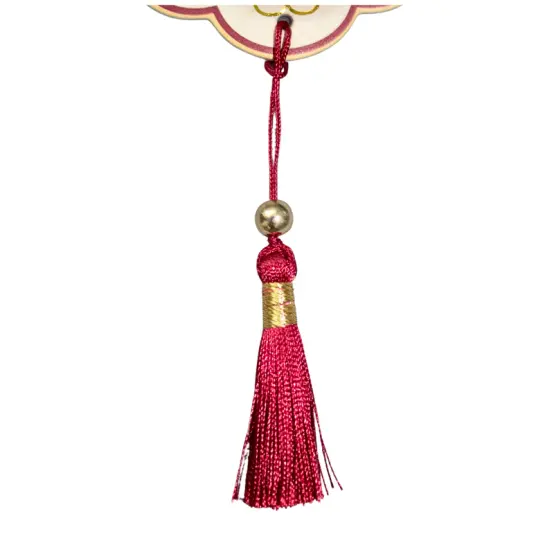
The product uses a red hanging cord, decorative beads, and a long red tassel.
These components influence the overall hanging length, balance, and presentation of the card.
Their attachment positions should be included in the design review rather than treated as accessories added after production.
What to Include in a Die Cut Air Freshener Design File
A production-ready design requires more information than a finished illustration.
For a multi-component paper air freshener, the artwork should clearly identify each physical component and its relationship to the others.
Useful design information includes:
- Outer cutting outline and finished dimensions
- Separate cutting outline for the rotating center
- Front and back printing artwork
- Bleed and safe areas for printed graphics
- Connection holes and assembly reference points
- Hanging cord attachment positions
- Required decorative finishing areas
- Material construction and thickness requirements
Vector artwork is generally preferable for defining cutting outlines and precise graphic elements.
The manufacturer should confirm the final cutting tolerances, bleed requirements, minimum feature sizes, and assembly clearances.
These values should be established through technical review rather than assumed from the appearance of a digital mockup.
How the Rotating Structure Affects Production
The rotating center creates additional assembly requirements compared with a conventional flat paper air freshener.
The Fortune design uses a fixed decorative base and a movable central component connected through a central assembly point.
For the rotation to function as intended, both components must be correctly aligned.
During product development, several areas deserve attention.
Connection Alignment
The center of the movable component should align with the supporting connection point.
Poor alignment may cause uneven movement or affect the appearance of the assembled product.
Movement and Clearance
The rotating component needs suitable clearance from the surrounding structure.
Excessive friction or contact between the layers may prevent smooth movement.
The exact clearance depends on the material thickness, connector design, and manufacturing process.
Assembly Stability
The connector must hold the layers together while permitting the intended movement.
Sample inspection should verify that the rotating component remains secure during normal handling.
A rotating design should never be approved solely because its individual printed components look correct.
Coordinating Printing with the Die Cut Shape
Printed artwork and cutting outlines must be reviewed together.
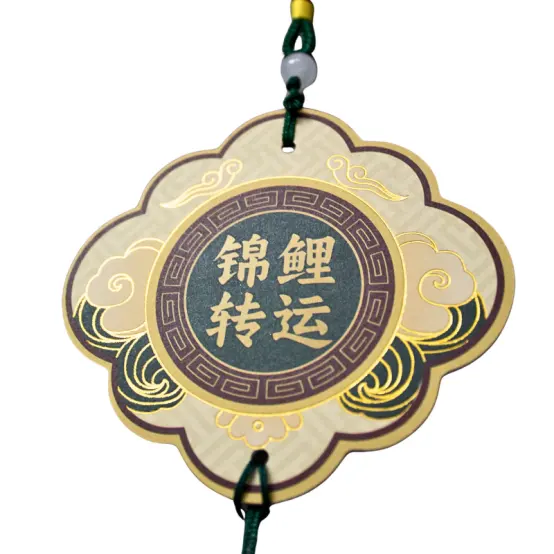
For the Fortune design, the front includes a red circular illustration with traditional Chinese lettering, while the reverse side displays a large "Fu" character and decorative cloud patterns.
These separate front-and-back compositions demonstrate the importance of print orientation and registration.
When artwork is prepared for a shaped air freshener, important details should remain clear of cutting edges and attachment points.
Gold foil or other finishing elements may require additional clearance according to the selected process.
Printing and finishing specifications should be approved using physical samples, particularly when the artwork includes fine borders or small decorative details.
Choosing Materials for a Layered Paper Air Freshener
The product structure diagram shows printed paper surfaces and an absorbent sponge layer used to carry fragrance.
The scented material and supporting components must work together as a complete assembly.
When selecting the construction, buyers should consider:
- Material thickness and rigidity
- Absorbency and compatibility with the selected fragrance
- Cutting quality around shaped edges
- Strength near connection and hanging holes
- Printed surface quality after fragrance application
- Finished product weight and hanging balance
Different materials may require different cutting, bonding, and assembly procedures.
For a rotating fragrance card, it is particularly important that the finished construction maintains the intended movement and appearance after fragrance application.
Checking Hanging Length and Product Balance
A decorative fragrance card should be evaluated in its complete assembled form.
The Fortune design includes a top hanging loop, a shaped card body, and a long tassel below.
The overall hanging length is therefore greater than the dimensions of the printed card alone.
For custom projects, the specification should separately identify the body size, cord length, tassel length, and finished overall dimensions.
Sample testing should confirm that the card hangs correctly and that the accessories remain securely attached.
Appropriate use locations and contact precautions should also be included in the final product instructions.
Sample Inspection Checklist for Custom Die Cut Air Fresheners
Before approving mass production, buyers should review a complete finished sample.
The following checks are particularly relevant to shaped and rotating designs.
Cutting Accuracy
Inspect the outer silhouette for uneven edges, incomplete cuts, and visible defects.
Component Fit
Check that the circular centerpiece fits correctly within the outer frame and rotates as intended.
Print Registration
Confirm that printed patterns, borders, and lettering align with the finished cut shapes.
Attachment Quality
Inspect hanging holes, connection points, decorative beads, and tassel attachments.
Fragrance Compatibility
Evaluate the finished scented material and its interaction with the printed and assembled components.
Packaging Protection
Review the sealed packaging to ensure that the finished product and decorative accessories are adequately protected during storage and transport.
Any approved changes should be documented before the production order is confirmed.
Developing Custom Die Cut Air Fresheners with Aroma Ease
Aroma Ease supports OEM and ODM paper air freshener development, including custom shapes, printed artwork, fragrance selection, decorative finishing, and hanging accessories.
The Fortune Rotating Fragrance Card illustrates how a conventional scented paper product can be developed into a more complex design through separate cut components and a rotating assembly.
For brands interested in creating similar products, an initial project brief should include the intended shape, artwork, dimensions, materials, fragrance requirements, accessories, packaging, and estimated order quantity.
Technical drawings and physical samples can then be reviewed to confirm production feasibility.
Planning a custom-shaped paper air freshener? Contact Aroma Ease with your artwork and product requirements to discuss die-cutting, assembly options, sample development, and OEM manufacturing.
Frequently Asked Questions
1. What are die cut air fresheners?
Die cut air fresheners are fragrance products cut into defined shapes using a die-cutting process. Their outlines can follow logos, illustrations, decorative patterns, or other approved designs.
2. Can a die cut air freshener have a rotating center?
Yes. A suitable design can combine a shaped outer frame with a separate movable component. The connection method, material thickness, and assembly clearance must be evaluated during development.
3. What artwork files are needed for custom die cutting?
Vector files such as AI, EPS, or suitable PDF files are commonly used for precise cutting outlines. Buyers should also provide printing artwork, dimensions, and any special assembly requirements.
4. Does a rotating design require different tooling?
It may require separate cutting outlines or tooling for different components. The exact requirements depend on the design, material, manufacturing equipment, and whether existing tooling can be reused.
5. What should buyers inspect before approving a rotating air freshener?
Key checks include cutting accuracy, rotating movement, connection strength, print alignment, material compatibility, hanging accessories, and the condition of the final packaging.
6. Can the shape, fragrance, and hanging accessories be customized together?
Yes. OEM projects may combine custom outlines, artwork, fragrance selections, cords, tassels, and packaging. Buyers should confirm each specification and approve a complete sample before production.


- branded car air fresheners paper
- fresh scent car air freshener
- strong scent car air freshener
- car fragrance freshener
- car interior scent booster
- car air freshener for bad odor
- scented car air fresheners
- small batch custom paper air fresheners
- custom logo paper air fresheners
- logo printed paper air fresheners
- hotel room paper air fresheners
- Custom Air Fresheners
- paper air freshener OEM
- magnetic gift set air freshener
- smoke odor eliminator paper
- eco-friendly paper air freshener
- Paper Air Fresheners
- Car Fragrance
- Eco-Friendly Fragrance
- Sustainable Packaging
- Fast Turnaround
- Eco-Friendly Promotions
Bring Your Brand to Life with Custom Paper Air Fresheners.
- Eco-Friendly Materials
- Custom Designs
- Long-Lasting Fragrance
- Fast Turnaround
- High-Quality Printing
- Competitive Pricing

FREE SAMPLE