


 Home > Blog > Industry News >
 Recyclable Paper Air Fresheners: Audit the Finished SKU, Not Just the Card
Paper air freshener seems like an easy product to make.
Paper card. Fragrance. String.
Place a leaf on the package and you're done.
It isn't.
If you are a retailer or private-label buyer looking to import recyclable paper air fresheners, the first question you want to ask yourself is, does the body look recyclable? What is the ultimate fate of each and every part after the fragrance has served its purpose is the real question.
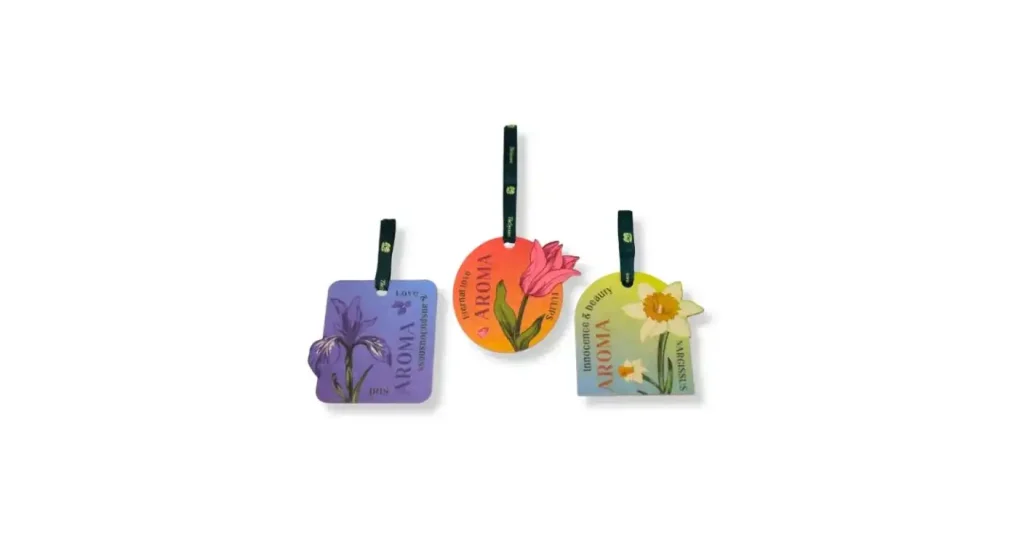
This encompasses the card, hanging accessory, printing, inner pouch and retail packaging.
An environmental claim should refer to the product offered – not to one convenient section of the product.
Set up the Claim BEFORE the Artwork.
“Eco-friendly” and “recyclable” are not synonymous of “biodegradable”, or “paper-based”.
If package has recycling information on front, make a determination about what the information pertains to.
The scented card?
The secondary box?
The whole package including the unit?
As part of our overall sustainability efforts, AromaEase's current “Paper Air Freshener Guide – Recyclable” outlines the use of greener paper and safer fragrance options.
That's only the start of the conversation for a brand that's about to create artwork for retail.
A clear cut statement in terms of language is typically more defendable than a broad green aspiration.
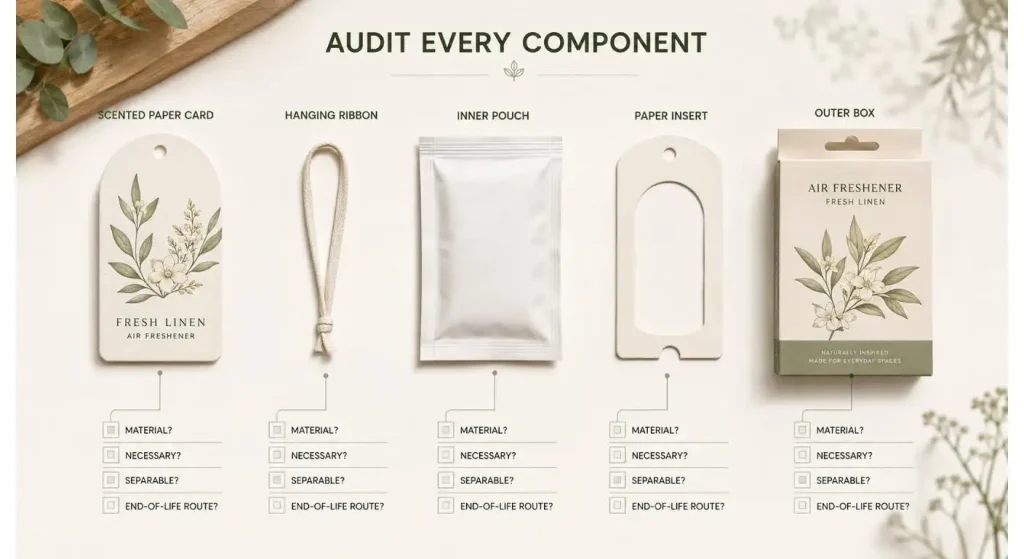
Disassemble Finished Product on Table.
This is an interesting and useful sourcing exercise.
Physically separate all that you can, in one finished sample.
Card.
Ribbon or string.
Sealed pouch.
Printed sleeve.
Gift box.
Any insert.
You can now easily see the sustainability brief.
AromaEase's Biodegradable Hanging Paper Air Freshener Set is another example that demonstrates why it's important for purchasers to take into account the entire structure of an air freshener, not just the paper that it's made of.
At end of use, if there is no reasonable way to keep the two materials together, determine if the customer can easily separate the materials.
Do this prior to approval of the packaging copy.
| Component | Buyer Should Confirm | End-of-Life Question |
| Scented Card | Paper structure and finish | What route is intended locally? |
| Hanging Accessory | Ribbon, string or elastic | Can it be removed easily? |
| Printing / Finish | Ink, coating or decorative finish | Does it affect the intended route? |
| Inner Pack | Material and barrier function | Is it necessary and separable? |
| Outer Box | Paperboard and added components | Can components be separated? |
| Insert | Paper, film or other material | Is it needed after purchase? |
With this hanging accessory, you can make it as large or as small as you want.
The weight of a ribbon could be very small.
Give it a factor of ten thousand units and it's now part of the material decision.
It doesn't imply that all hanging air fresheners have to be ribbon or string free, though. They serve a purpose, are discernable and may be significant to the product's identity.
It means that they must have a specification.
Is it possible to have the accessory easily removed?
Is the customer aware that it may be disposed of separately to the paper body?
Is there a simpler way to hang so that it can serve the same purpose?
These are more important questions than just selecting an accessory for its photo-friendly qualities.
The fragrance industry is still to be perfumed.
If the customers don't like using the product, the sustainability project is not a commercial success.
There is still the requirement that the fragrance needs to be retained adequately in the paper, the print surface is still required to be purposeful and the final freshener still needs to be functional when subjected to typical use.
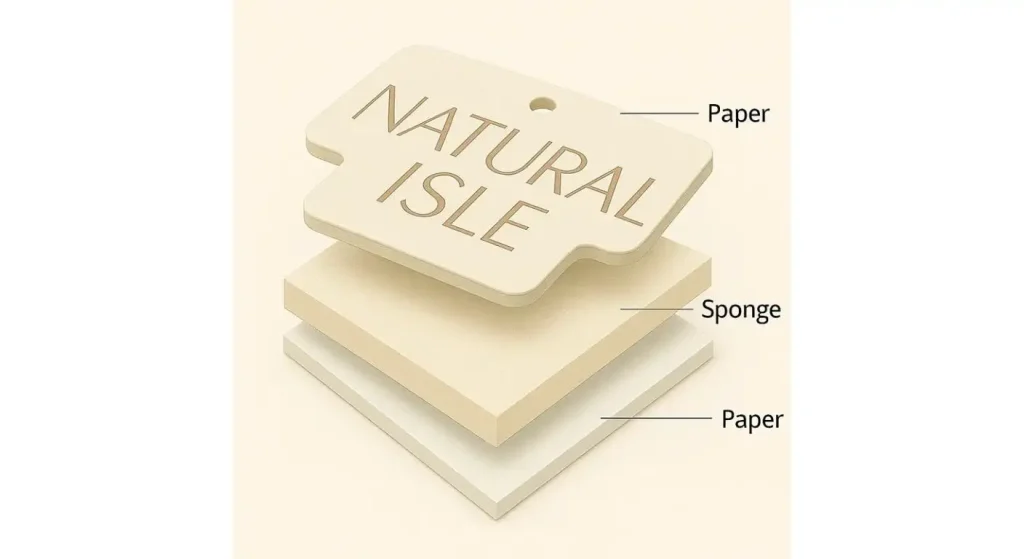
Hanging products with a paper–sponge–paper absorbent structure, customizable to the requirements of the fragrance retention and release, combined with printing and die cutting, are developed by AromaEase.
Therefore, do not make the specification any less until the product no longer performs its primary function.
Reduce unnecessary complexity.
That's not the same thing as taking away required performance!
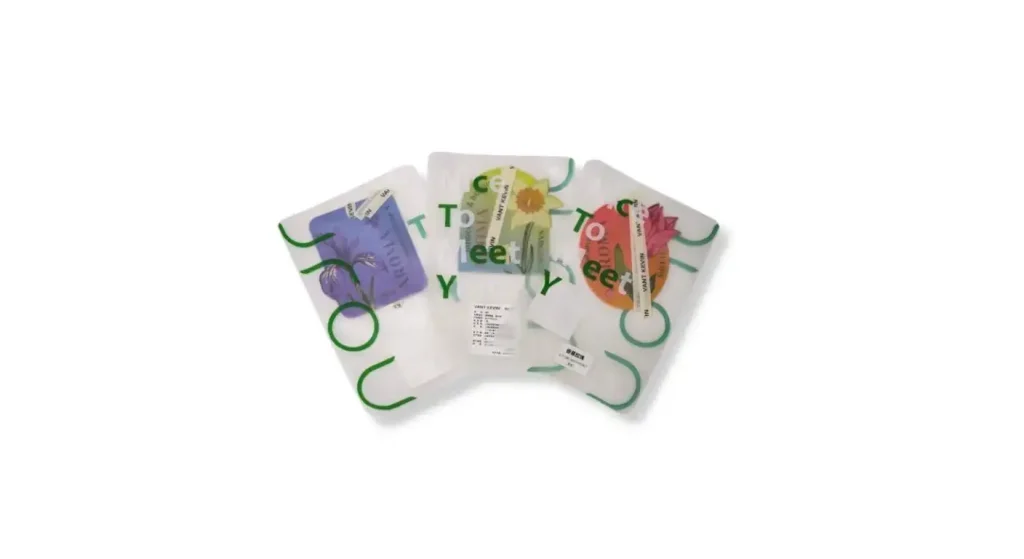
Packaging Can Undo a Good Material Decision.
Often times the air freshener is the focus of all the sustainability attention and the package is ignored.
This is the odd way round for a retail SKU.
According to the sustainability and company information provided by AromaEase, it strives to minimize the use of plastics and uses recyclable and compostable packaging materials as appropriate.
The next thing to consider for buyers is to determine what packaging is actually required for the sales channel.
Don't require identical packaging for a single promotional giveaway and a high quality retail gift set.
An inner barrier may be necessary to provide fragrance protection.
Another layer of retail presentation might be needed.
However, each added component needs to have its "value added".
This is the environmental side of custom shapes as well.
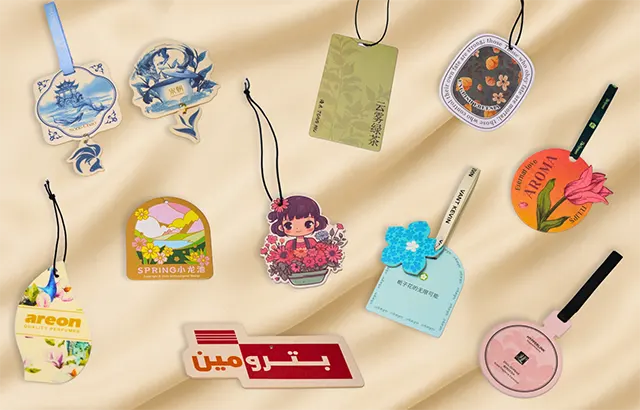
Paper air fresheners are excellent branding tools for one of the main reasons: custom die cutting!
The shapes of a flower, logo outline, product silhouette or character can become a familiar image before a customer even smells that product.
AromaEase's Custom Shapes & Packaging program is designed to accommodate custom die-cut shapes and packaging for retail and promotional items.
However there is an unusual shape to which we should ask a manufacturing question:
What would be the efficiency of this shape on the production sheet?
Sometimes it can be helpful to move a curve, make a projection smaller than it was originally or slightly adjust the direction of it so that the concept of the design is still retained, but the layout is more practical.
Eco-design can be a lot more subtle than it seems.
It's a series of little choices, early choices.
Ensure Disposal Instructions are readily available.
Please don't make the reverse side of the pack an eco-tract.
The associated instructions to the customer should be easily understandable.
If we must split up parts, just say as much.
When making a recycling claim based on local collection, do not make it universal.
If it is only the outer paper box that makes a particular claim, then state this.
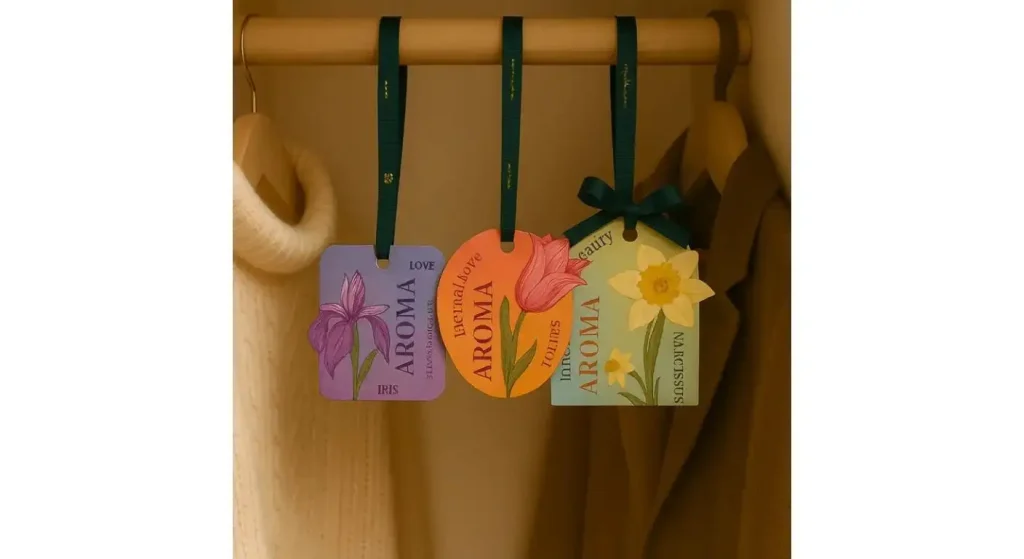
For example, this is particularly critical for household products as the same freshener could be used in a wardrobe, a drawer, a bedroom or a storage area. For these types of everyday uses, AromaEase's Home & Closet Paper Air Fresheners state they're manufactured with recyclable resources.
This is because the customer should not have to remember a sustainability lecture months down the road when the product is to be discarded.
Accept Eco Claim With the Physical Sample
The art approval table should be the same as the sustainability approval table.
| Approval Item | Practical Check |
| Claim Scope | Product, card or packaging clearly identified |
| Material Evidence | Supplier specification matches wording |
| Physical Sample | Finished SKU matches approved materials |
| Separation | Customer can remove different components |
| Instructions | Disposal message is short and visible |
| Market Check | Claim suits intended sales market |
| Artwork | No unsupported absolute environmental claims |
Never check the copy with a specification sheet while someone else is checking a different packaged sample.
Actually hold the product.
Read the claim.
Take it apart.
Determine what is feasible to separate.
Consider packaging materials.
Afterwards, ask if the words on the box match what is in front of you.
There are more inconsistencies than you would think and that simple exercise uncovers them.
Conclusion
The fact that the largest part that can be seen in a recyclable paper air freshener is paper should not make it the environmental story.
A more robust option is to check out the complete SKU: fragrance card, hanging accessory, print, protective packaging and retail presentation.
Instead of asking:
Is this product Recyclable?
Ask:
Which parts can we clearly explain, after use make easy for the customer to handle and prove to be confident about?
That's a more powerful sustainability brief and it's typically a more powerful packaging brief as well.
FAQs
Q1. Can paper air freshener be recycled?
May vary depending on the completed product and the recycling program in which the product is sold. In addition to the word "paper," buyers should make sure to check the paper body, the accessories, the coatings and the packaging.
Q2. Recyclable / biodegradable air fresheners – What's the difference?
No. The terms refer to various EoL concepts and should not be automatically interchanged.
Q3. Are paper air fresheners that can be recycled custom printable?
Yes. Paper air fresheners can include custom artwork, die-cut shapes and fragrance development, and be sure to check the final specification for consistency with the sustainability claim.
Q4. Is Green Packaging important?
Yes. The package and fragrance card are sold and discarded by the customer—the package may be unnecessary, or hard to separate, which can adversely affect the package design.
Q5. What is it buyers need to look for prior to bulk production?
Accept the "finished" actual sample. Inspect the card materials, hanging accessory, print/finish, individual pack, outer packaging and wording of any environment claims.


- branded car air fresheners paper
- fresh scent car air freshener
- strong scent car air freshener
- car fragrance freshener
- car interior scent booster
- car air freshener for bad odor
- scented car air fresheners
- small batch custom paper air fresheners
- custom logo paper air fresheners
- logo printed paper air fresheners
- hotel room paper air fresheners
- Custom Air Fresheners
- paper air freshener OEM
- magnetic gift set air freshener
- smoke odor eliminator paper
- eco-friendly paper air freshener
- Paper Air Fresheners
- Car Fragrance
- Eco-Friendly Fragrance
- Sustainable Packaging
- Fast Turnaround
- Eco-Friendly Promotions
Bring Your Brand to Life with Custom Paper Air Fresheners.
- Eco-Friendly Materials
- Custom Designs
- Long-Lasting Fragrance
- Fast Turnaround
- High-Quality Printing
- Competitive Pricing

FREE SAMPLE