


Custom Car Air Fresheners: Everything You Need to Know
Custom car air fresheners are paper or card-based scented products printed with your logo, brand colors, and chosen fragrance — manufactured to order for brand owners and retailers worldwide. This guide covers every decision you need to make: product types, paper materials, OEM vs. ODM options, compliance requirements, MOQs, lead times, and how to order from a China manufacturer.
Whether you are launching a branded product line, stocking retail shelves, or sourcing promotional merchandise, this guide gives you the exact information to source smart and avoid costly mistakes.
What Are Custom Car Air Fresheners?
Custom car air fresheners are scented products designed to hang inside a vehicle and eliminate or mask odors. The most widely produced format is the hanging paper card — a die-cut, printed, and fragrance-soaked piece of absorbent card suspended from a string.
Businesses order custom versions for several reasons:
- Retail product lines — selling branded air fresheners in stores or online
- Automotive dealerships — placing fresheners in new or serviced vehicles
- Promotional merchandise — branded giveaways at events or in gift bags
- Hotel and rental car fleets — consistent scent branding across locations
- Wholesale distribution — supplying independent retailers under a private label
Paper hanging fresheners dominate the wholesale B2B market because they are lightweight, low-cost to produce, easy to pack and ship in bulk, and fully customizable in shape, print, and fragrance.
Types of Custom Car Air Fresheners
Not all air freshener formats suit every business. Below is a comparison of the most common types ordered by brand owners and retailers at wholesale scale.
| Format | Best For | MOQ Range | Customization Level | Cost Level |
|---|---|---|---|---|
| Hanging paper card | Retail, promo, wholesale | 500–5,000 units | Full (shape, print, scent) | Low |
| Vent clip | Automotive retail, dealerships | 1,000–5,000 units | Moderate | Medium |
| Gel cup/pod | Long-lasting scent products | 2,000+ units | Moderate | Medium–High |
| Spray | Premium retail, hotels | 1,000+ units | Low–Moderate | High |
| Felt/fabric card | Eco boutique retail | 1,000+ units | High | Medium–High |
Paper hanging cards are the most popular wholesale format due to the lowest per-unit cost, the widest range of customization options, and the easiest logistics — they are flat, lightweight, and vacuum-sealable. For most brand owners and retailers entering the market, custom paper hanging air fresheners are the fastest and most cost-efficient starting point.
Paper Materials Explained — What Actually Affects Scent Quality
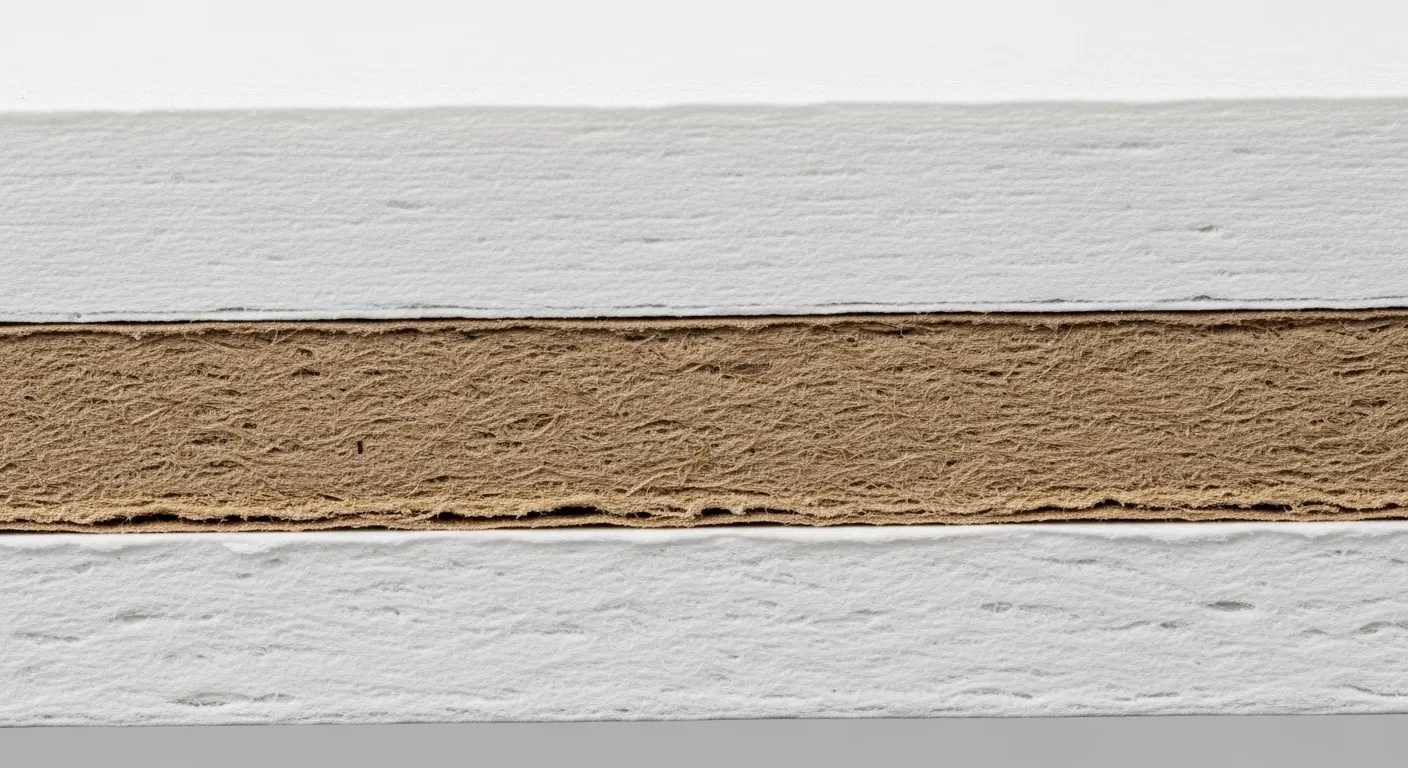
This is the detail most sourcing guides skip entirely — and it directly determines how long your product smells good on the shelf and in the car.
The three most common paper materials used in hanging car air fresheners are:
- Cellulose fiber card — the standard industry material; absorbs fragrance oil efficiently, holds scent for 4–6 weeks under normal conditions
- Compressed cotton fiber — denser structure, higher oil absorption capacity, longer scent release (up to 8 weeks); used for premium product lines
- Kraft paper / recycled card — lighter and more eco-oriented; lower oil retention but popular for sustainability-led brands
GSM (grams per square meter) is the key measurement. Most hanging paper fresheners use 250–350 GSM card stock. Higher GSM means the paper is denser and holds more fragrance oil, which directly extends the scent duration. A 280 GSM card will typically outlast a 200 GSM card by 2–3 weeks.
| Material | Typical GSM | Scent Hold Duration | Eco Option Available? |
|---|---|---|---|
| Cellulose fiber card | 250–300 | 4–6 weeks | Yes (FSC-certified) |
| Compressed cotton fiber | 300–350 | 6–8 weeks | Limited |
| Kraft / recycled paper | 200–280 | 3–5 weeks | Yes (FSC, recycled) |
For brands targeting European or North American eco-conscious retailers, FSC-certified paper is increasingly requested — and a responsible manufacturer will offer it as a standard option. Aroma Ease produces fresheners with FSC-certified paper as part of its standard material options, making compliance documentation straightforward for export buyers.
OEM vs. ODM vs. Private Label — Which Option Is Right for You?
These three terms describe very different relationships between you and your manufacturer. Choosing the wrong model can cost you time and money.
OEM (Original Equipment Manufacturer): You provide the complete product specifications — shape, GSM, fragrance formula, artwork, and packaging design. The factory manufactures exactly to your instructions. This gives maximum control but requires experience and typically a higher MOQ.
ODM (Original Design Manufacturer): The factory develops the product — materials, structure, and often a fragrance range — and you brand it with your logo. You customize within the factory's existing framework. This is faster, cheaper, and ideal for new brands entering the market.
Private Label: A subset of ODM. The factory has an existing product line, and you apply your branding (logo, color scheme, label) to it. The fastest route to market with the lowest investment.
| OEM | ODM | Private Label | |
|---|---|---|---|
| Who designs the product? | Buyer | Manufacturer | Manufacturer |
| Experience required | High | Low | Very Low |
| Customization level | Full | Moderate | Low–Moderate |
| MOQ | Higher (2,000–5,000+) | Medium (500–2,000) | Lower (300–1,000) |
| Lead time | Longer (20–35 days) | Medium (15–25 days) | Shorter (10–15 days) |
| Best for | Established brands | Growing brands | Market entry / startups |
Aroma Ease supports all three models — OEM, ODM, and private label — under one roof, which means buyers can start with private label and scale into full OEM as their brand grows without changing suppliers.
Compliance & Certifications for Global Buyers
If you plan to sell custom car air fresheners in the EU, USA, UK, or Australia, compliance is not optional. Buyers who skip this step face customs holds, product bans, and liability exposure.
The key certifications and regulations to understand before placing a bulk order:
| Certification | Required For | What It Covers | Who Provides It |
|---|---|---|---|
| IFRA | Global standard | Fragrance ingredient safety limits | Manufacturer / Certified Lab |
| REACH | EU & UK markets | Chemical substance registration (SVHC list) | Manufacturer / 3rd Party Lab |
| CARB / VOC | USA (California + others) | Volatile organic compound emission limits | 3rd Party Lab |
| MSDS / SDS | All export markets | Safety data sheet for fragrance chemicals | Manufacturer |
| FSC | Eco-conscious markets | Certified sustainable paper sourcing | Paper Supplier |
| RoHS | Electronics-adjacent components | Restricts hazardous substances in packaging | 3rd Party Lab |
A reliable China manufacturer should proactively provide all relevant documentation — not just a product sample. If a supplier cannot supply IFRA compliance letters and MSDS sheets upfront, treat that as a red flag.
IFRA (International Fragrance Association) standards apply globally and set maximum usage levels for fragrance ingredients. REACH compliance for new fragrance formulations targeting the EU can add 6–12 months to product development if testing is not already completed. Ask your manufacturer whether their fragrance oils are pre-tested to IFRA and REACH standards before committing to a custom blend.
Market Size & Industry Data
The global car air freshener market is growing steadily, driven by rising car ownership, increased consumer spending on in-vehicle experience, and the expansion of branded promotional products.
Key market data points:
- The global car air freshener market was valued at approximately $2.41–$2.9 billion in 2025 and is projected to reach $3.51–$4.2 billion by 2034, growing at a CAGR of 4.4–6.1%
- North America holds approximately 30% of the global market share, making it the single largest regional market
- Asia-Pacific is the fastest-growing region, driven by rising middle-class car ownership and the growth of automotive retail branding programs
- The paper/card hanging freshener segment remains the dominant product format in the wholesale and private label channel globally
- Eco-friendly and sustainable variants are the fastest-growing product sub-segment, with increasing demand from EU and US buyers for FSC-certified paper and IFRA-compliant fragrances
This growth creates a strong opportunity for brand owners and retailers who establish a private label car air freshener line now — before the market becomes more competitive at the retail shelf level.
MOQ, Pricing & Lead Times — What to Expect
One of the most common questions from first-time buyers is: How many units do I need to order, and what will it cost?
Here is a realistic breakdown for custom paper car air fresheners from a China manufacturer:
| Order Type | MOQ | Lead Time | Estimated Unit Price |
|---|---|---|---|
| Pre-made sample (standard scent) | 5–20 pcs | 3–5 business days | Sample fee applies |
| Custom sample (bespoke shape/scent) | 20–50 pcs | 7–10 business days | Sample fee applies |
| Small custom bulk order | 500–1,000 units | 15–20 business days | $0.25–$0.50/piece |
| Standard bulk order | 1,000–5,000 units | 15–25 business days | $0.15–$0.30/piece |
| Large-volume bulk order | 5,000+ units | 20–30 business days | $0.10–$0.20/piece |
Key notes for buyers:
- Unit price drops significantly at 5,000+ units — volume purchasing is where paper air freshener margins become most attractive for retail resellers
- Custom shapes (die-cutting) and custom fragrance blending may carry a one-time tooling or development fee
- Standard payment terms: 30–50% deposit on bulk order, balance before shipment
- Always request a physical sample before approving bulk production — a responsible manufacturer will send you one
Shipping Options — Air Freight vs. Sea Freight
When sourcing from China, shipping method affects both your cost and your cash flow cycle. Neither option is universally "better" — the right choice depends on your order size and timeline.
| Air Freight | Sea Freight | |
|---|---|---|
| Transit time | 5–10 business days | 20–40 days (port to port) |
| Cost per kg | High ($4–$10/kg typical) | Low ($0.05–$0.15/kg typical) |
| Best for | Urgent orders, small quantities | Large bulk orders |
| Minimum order size | Any | Typically 1 CBM+ (one pallet) |
| Customs complexity | Low–Medium | Medium (requires more documentation) |
| Recommended order size | Under 200 kg | Over 200 kg |
DDP (Delivered Duty Paid) is an incoterm worth requesting if you are new to China imports. Under DDP terms, your manufacturer or freight forwarder handles all customs clearance, duties, and delivery to your door. This removes the risk of unexpected customs fees and simplifies logistics for first-time importers.
For most standard bulk orders of 2,000–5,000 units of hanging paper air fresheners, sea freight is significantly more cost-effective — a full carton of 1,000 units typically weighs 8–12 kg, making large orders very efficient by sea.
How to Order Custom Car Air Fresheners — Step by Step
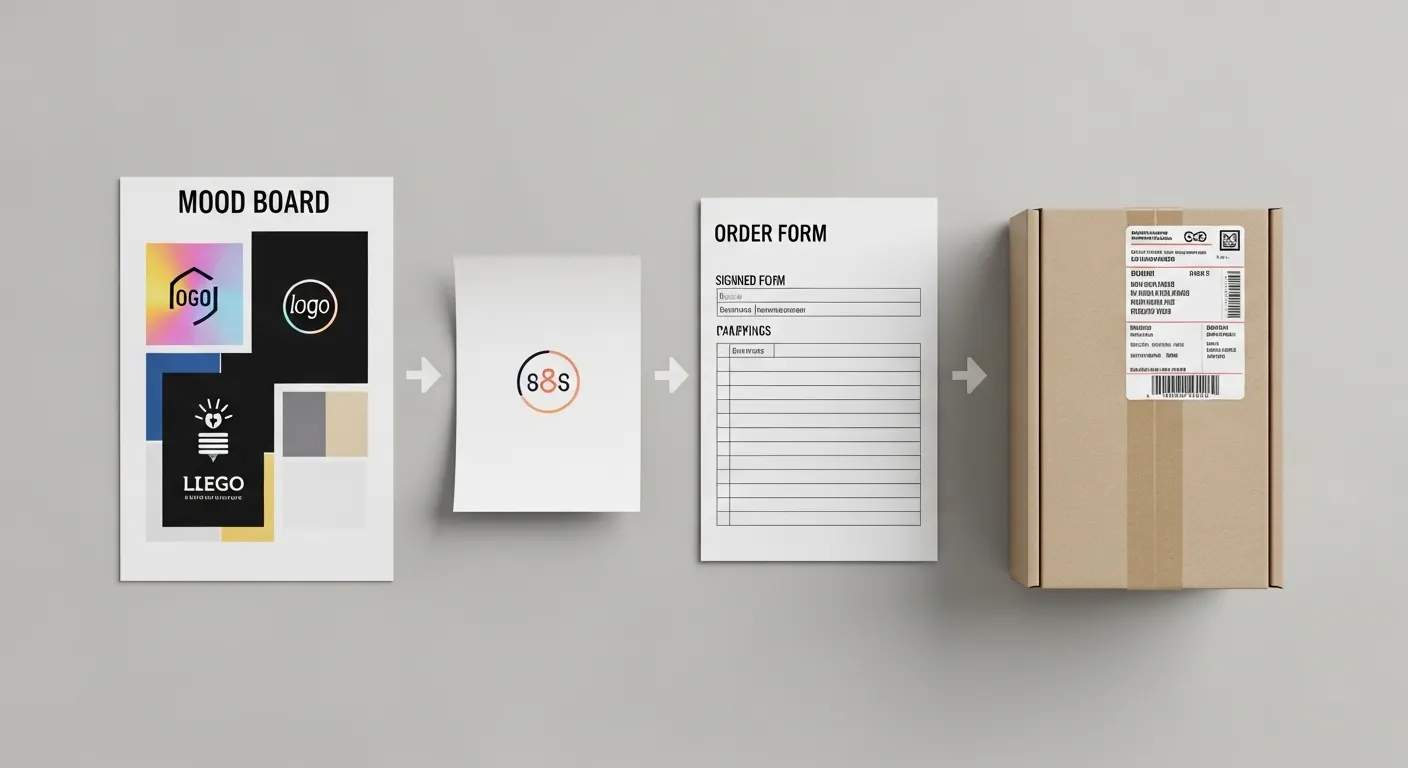
The ordering process from a professional China manufacturer follows a clear sequence. Understanding it helps you plan your timeline and avoid delays.
- Define your requirements — Decide on quantity, shape (standard tree/custom die-cut), paper grade (GSM), fragrance choice (from catalog or custom blend), and packaging format (individual polybag, header card, retail box)
- Request a quote — Contact the manufacturer with your specifications. A good supplier will respond within 24–48 hours with a detailed quotation covering unit cost, tooling fees (if applicable), sample cost, and lead times
- Receive and evaluate your sample — A physical custom sample is produced in 7–10 business days. Evaluate the scent strength, paper quality, print quality, and packaging. Do not skip this step
- Approve artwork and fragrance — Submit your final logo files (AI or PDF preferred), confirm Pantone colors, and sign off on the fragrance formula. Request a final digital proof from the manufacturer before production begins
- Place your bulk order and pay deposit — Confirm the order in writing and pay the agreed deposit (typically 30–50%). Retain the signed quotation and artwork approval as your purchase record
- Production begins — Standard bulk production runs 15–25 business days after deposit and artwork approval. A professional manufacturer will provide a production timeline and proactive updates
- Quality check and shipment — Before shipment, request a pre-shipment inspection report or photos of finished goods. The manufacturer packs and ships via your chosen freight method
- Receive and sell — Goods arrive vacuum-sealed and ready for retail, distribution, or direct sale. Store in a cool, dry environment away from direct sunlight to preserve fragrance life
The total timeline from first contact to goods in your warehouse is typically 6–10 weeks for a first custom order (including sample approval), and 4–6 weeks for repeat orders.
Why Source from a China Paper Air Freshener Manufacturer?
China is the world's dominant supplier of paper car air fresheners for one reason: factory-direct pricing at industrial scale. Raw material proximity, deep manufacturing infrastructure, and decades of export experience make China the most cost-competitive source globally for this product category.
Key advantages of sourcing direct from a China manufacturer:
- Factory-direct pricing — No middlemen, no distributor margin. You buy at production cost plus factory margin
- Full customization capability — Custom shapes, 80+ fragrance options, full-color printing, custom packaging — all under one roof
- Export experience — Professional exporters handle MSDS documentation, IFRA compliance letters, shipping, and customs paperwork routinely
- Scalability — Start at 500 units and scale to 50,000 without changing suppliers
- Fast sampling — Reputable factories offer physical samples within 7–10 business days
Aroma Ease is a China-based paper air freshener manufacturer offering OEM, ODM, and private label services to brand owners and retailers across 60+ countries. Products are built with a 3-layer absorbent paper structure, IFRA-certified fragrance oils, and FSC-certified paper options — with full compliance documentation provided on request.
The company supports fragrance cards for retail programs, automotive hanging fresheners, and a full range of custom shapes and scent profiles — making it a single-source solution for buyers scaling a private label fragrance brand.
FAQ — Custom Car Air Fresheners for Brand Owners & Retailers
MOQ depends on the level of customization. Standard designs with a logo print typically start at 500–1,000 units. Fully custom shapes with bespoke fragrances may require 1,000–2,000 units minimum due to die-cutting tooling costs. Many manufacturers — including Aroma Ease — offer flexible MOQs for new buyers and allow small custom sample runs of 20–50 pieces before committing to bulk production.
OEM means you provide the full product specification and the factory manufactures it to your design. ODM means the factory develops the product design and you brand it with your logo. OEM gives you more control but requires more preparation. ODM is faster and better suited to brands entering the market for the first time. Both models are valid — the right choice depends on your budget, timeline, and how specific your product requirements are.
For the EU and UK, you need IFRA-compliant fragrance oils and REACH-compliant chemicals — your manufacturer should provide both certificates. For the USA, especially if selling in California, CARB/VOC compliance is important. For all markets, an MSDS (Material Safety Data Sheet) is required for shipping and customs. If your brand targets eco-conscious retailers, FSC-certified paper documentation adds significant credibility. A professional China manufacturer will provide all of these documents as standard — always ask before ordering.
Allow for the following approximate timeline: custom sample production takes 7–10 business days; bulk production after approval takes 15–25 business days; sea freight shipping adds 20–40 days depending on destination. Total first-order timeline is typically 6–10 weeks from first inquiry to delivery. Repeat orders are faster because artwork and samples are already approved, reducing the total lead time to 4–6 weeks.
The three main materials are cellulose fiber card (most common, 4–6 week scent hold), compressed cotton fiber (premium, 6–8 week scent hold), and kraft/recycled paper (eco-option, 3–5 week scent hold). GSM weight is the most important factor — higher GSM means denser paper and more fragrance oil absorbed, which directly extends how long your product smells good. For retail products where shelf life matters, specify 280–320 GSM cellulose or compressed cotton fiber. FSC-certified versions of cellulose card are available for brands with sustainability requirements.
Start Your Custom Order with Aroma Ease
If you are ready to source custom car air fresheners — whether for retail, wholesale distribution, or a private label brand — Aroma Ease offers factory-direct OEM, ODM, and private label production with full compliance documentation, fast sampling, and global shipping.
Contact the team at airfreshenerpaper.com to request a free quote, ask for a sample pack, or download the product catalog to review available shapes, fragrances, and packaging options. Response time is within 24 hours for all trade inquiries.


- branded car air fresheners paper
- fresh scent car air freshener
- strong scent car air freshener
- car fragrance freshener
- car interior scent booster
- car air freshener for bad odor
- scented car air fresheners
- small batch custom paper air fresheners
- custom logo paper air fresheners
- logo printed paper air fresheners
- hotel room paper air fresheners
- Custom Air Fresheners
- paper air freshener OEM
- magnetic gift set air freshener
- smoke odor eliminator paper
- eco-friendly paper air freshener
- Paper Air Fresheners
- Car Fragrance
- Eco-Friendly Fragrance
- Sustainable Packaging
- Fast Turnaround
- Eco-Friendly Promotions
Bring Your Brand to Life with Custom Paper Air Fresheners.
- Eco-Friendly Materials
- Custom Designs
- Long-Lasting Fragrance
- Fast Turnaround
- High-Quality Printing
- Competitive Pricing

FREE SAMPLE